The Future of Web Development in 2026: Trends Every Business Should Know
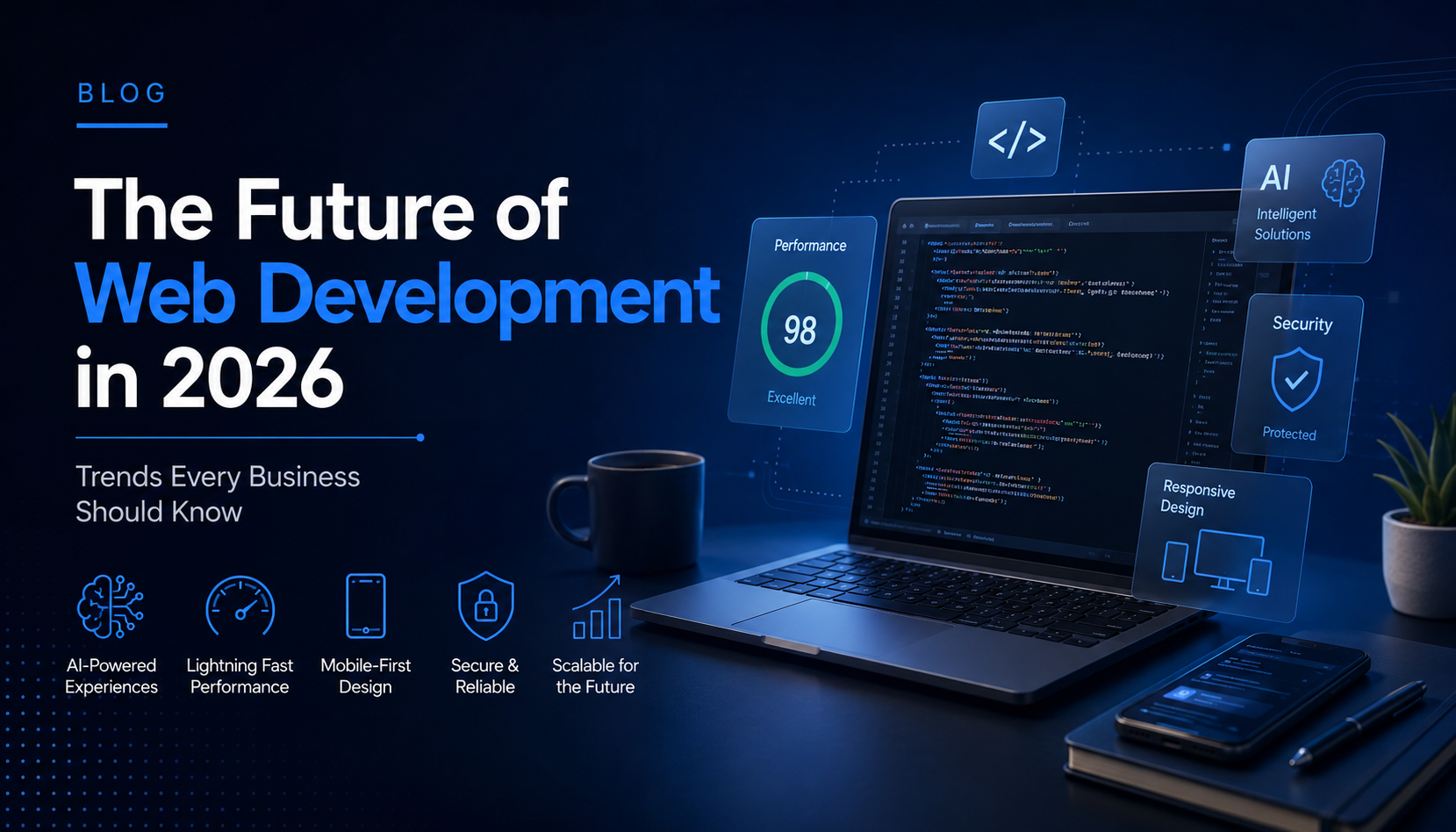
The Future of Web Development in 2026: Trends Every Business Should Know
The web is evolving faster than ever. In 2026, having a website is no longer enough—it needs to be fast, intelligent, secure, and designed to deliver an exceptional user experience. Businesses that embrace modern web technologies are seeing higher engagement, better search rankings, and increased conversions.
Whether you're launching a startup, running an online store, or modernizing an existing platform, understanding today's web development trends can help you stay competitive.
1. AI is Becoming a Standard Feature
Artificial Intelligence has transformed the way users interact with websites. From intelligent chatbots and personalized recommendations to automated customer support and content generation, AI is improving both customer experience and operational efficiency.
Businesses are now integrating AI to:
Answer customer queries instantly
Personalize user experiences
Automate repetitive tasks
Analyze customer behavior
AI is no longer a luxury—it's becoming an expectation.
2. Speed Matters More Than Ever
Users expect websites to load almost instantly. Even a small delay can increase bounce rates and reduce conversions.
Modern development frameworks like Next.js, optimized images, efficient caching, and content delivery networks (CDNs) help websites achieve exceptional performance.
A faster website means:
Better user experience
Improved SEO rankings
Higher conversion rates
Lower abandonment rates
3. Mobile-First is the New Standard
More than half of all web traffic comes from mobile devices. Websites must look and perform perfectly on smartphones, tablets, and desktops.
Responsive layouts, optimized touch interactions, and adaptive content ensure users have a seamless experience regardless of screen size.
4. Security Builds Trust
Cyber threats continue to evolve, making website security more important than ever.
Businesses should prioritize:
HTTPS encryption
Secure authentication
Regular software updates
Data protection best practices
Backup and recovery systems
A secure website protects both your business and your customers.
5. Modern UI and Better User Experience
Today's users expect clean, intuitive interfaces that are both visually appealing and easy to navigate.
Successful websites focus on:
Simple navigation
Minimalist design
Smooth animations
Clear calls to action
Accessible experiences for all users
Good design isn't just about appearance—it directly impacts customer satisfaction and business growth.
6. SEO Starts with Technical Excellence
Search engines reward websites that provide fast loading speeds, structured content, and excellent user experiences.
Modern SEO includes:
Semantic HTML
Optimized metadata
Core Web Vitals
Structured data
Mobile optimization
A technically optimized website helps your business reach more customers organically.
Choosing the Right Technology Stack
Businesses are increasingly adopting modern technologies such as:
React for dynamic user interfaces
Next.js for performance and SEO
Node.js for scalable backend services
PostgreSQL for reliable data management
Cloud platforms for secure deployments
The right technology stack ensures your website remains scalable as your business grows.
Final Thoughts
Web development is no longer just about building attractive websites—it's about creating digital experiences that are fast, secure, intelligent, and built for long-term growth.
Businesses that invest in modern technologies today will be better positioned to adapt to future changes, improve customer satisfaction, and stay ahead of their competitors.
Whether you're building a new platform or upgrading an existing one, focusing on performance, user experience, security, and scalability will ensure your website continues to deliver value for years to come.